
Mitochondrial Nutrition: How to Upgrade Your Cellular Powerhouses for All-Day Energy

When afternoon fatigue hits, most people reach for a familiar fix: an extra shot of espresso, a sugary energy drink, or a quick carbohydrate snack.
While caffeine and sugar provide a temporary jolt, they don't actually create energy in your body—they simply borrow it from your future self. A couple of hours later, you end up right back where you started: exhausted, foggy, and looking for another quick fix.
At Healthiest Calories, we don't believe in relying on artificial stimulants to get through the day. True, sustained physical and mental energy isn't created in a coffee cup; it is created inside your cells by your mitochondria.
By optimizing your diet with specific micronutrients, you can upgrade your cellular energy factories, eliminate midday slumps, and unlock all-day vitality.
What Are Mitochondria?
You might remember mitochondria from high school biology as the "powerhouses of the cell."
Virtually every single cell in your body contains hundreds to thousands of these microscopic organelles. Their main job is to convert the nutrients you eat (carbohydrates, fats, and amino acids) and the oxygen you breathe into ATP (adenosine triphosphate)—the universal energy currency that powers everything your body does:
- Thinking and focus
- Heart contraction and circulation
- Muscle movement and athletic performance
- Cellular repair and immune defense
When your mitochondria are abundant, healthy, and firing efficiently, you experience sharp mental clarity, boundless stamina, and fast recovery. But when your mitochondria are damaged or under-nourished, cellular energy drops—leading to chronic fatigue, brain fog, and premature aging.
The 4 Spark Plugs of Cellular Energy
Just like an engine requires spark plugs, oil, and clean fuel to run smoothly, your mitochondria rely on specific micronutrients to convert food into ATP efficiently.
Here are the four key "spark plug" nutrients your cellular powerhouses need:
1. Coenzyme Q10 (CoQ10)
CoQ10 is a fat-soluble compound directy involved in the Electron Transport Chain—the final step of ATP production inside the mitochondria. It also acts as a potent antioxidant, protecting fragile mitochondrial membranes from oxidative damage.
- Top Food Sources: Wild-caught salmon, grass-fed beef, organ meats (heart/liver), and sardines.
2. B-Complex Vitamins (B1, B2, B3, B12)
B vitamins act as essential coenzymes that help break down carbohydrates, fats, and proteins into usable fuel. Vitamin B3 (Niacin), for example, is the direct precursor to NAD+, a vital molecule required for mitochondrial energy production and cellular longevity.
- Top Food Sources: Pastured eggs, poultry, dark leafy greens, nutritional yeast, and legumes.
3. L-Carnitine
Think of L-Carnitine as the transport shuttle for fat. It picks up long-chain fatty acids from your cells and transports them across the inner mitochondrial membrane so they can be burned for fuel via beta-oxidation.
- Top Food Sources: Red meat (beef, lamb), dairy products, and poultry.
4. Alpha-Lipoic Acid (ALA)
ALA is a unique antioxidant that works in both water and fat environments. It helps key mitochondrial enzymes convert glucose into ATP while neutralizing free radicals produced during energy creation.
- Top Food Sources: Spinach, broccoli, tomatoes, Brussels sprouts, and organ meats.
The Mitochondrial Upgrade Menu
To maximize your cellular energy production, base your daily meals on nutrient-dense whole foods that deliver these essential spark plugs:
| Category | Mitochondrial Superfoods | Primary Benefit |
| Quality Proteins | Wild salmon, grass-fed beef, pastured eggs, sardines | Rich in CoQ10, L-Carnitine, and essential amino acids |
| Cruciferous Veggies | Broccoli, Brussels sprouts, cabbage, kale | High in Alpha-Lipoic Acid and sulforaphane |
| Dark Leafy Greens | Spinach, Swiss chard, arugula | Packed with Magnesium and B-complex vitamins |
| Healthy Fats | Avocados, extra virgin olive oil, walnuts | Provide clean-burning fatty acids for long-term fuel |
| Polyphenol-Rich Foods | Wild blueberries, dark chocolate (85%+), green tea | Protect mitochondrial membranes from oxidative stress |
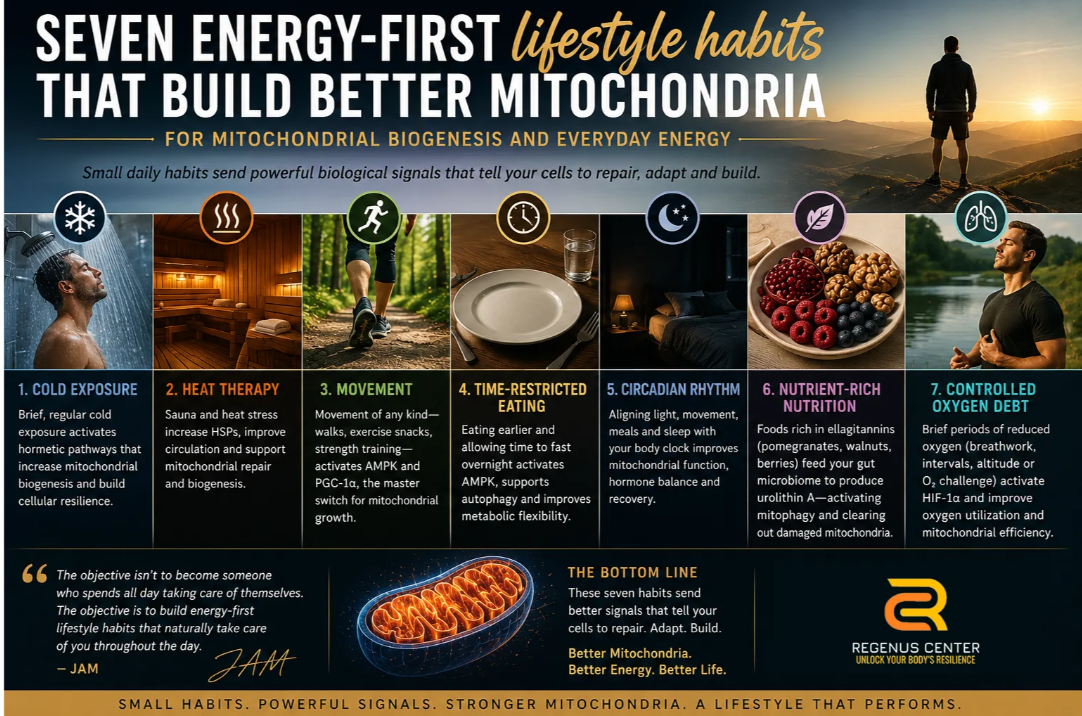
3 Lifestyle Habits That Boost Mitochondrial Biogenesis
Beyond nutrition, you can actually force your body to build brand-new mitochondria—a process known as mitochondrial biogenesis:
- Zone 2 Cardio Training: Low-intensity, steady-state cardio (like brisk walking, light cycling, or jogging at a conversational pace for 30–45 minutes) is the single most effective exercise trigger for creating new mitochondria.
- Cold Exposure: Brief exposure to cold water (such as a 60-second cold shower finish) triggers brown adipose tissue and stimulates mitochondrial proliferation.
- Intermittent Fasting: Giving your digestive system a 12- to 16-hour break overnight allows your cells to perform mitophagy—clearing out old, damaged mitochondria to make room for fresh, efficient ones.
Power Your Life from the Inside Out
Stop relying on short-term stimulants to drag yourself through the day. By feeding your body mitochondrial superfoods and adopting habits that stimulate cellular renewal, you can upgrade your biological engine and unlock clean, natural energy that lasts from morning to night.
Feed your powerhouses today, and feel the difference at the cellular level!